WHAT IT IS
Code you can snap together
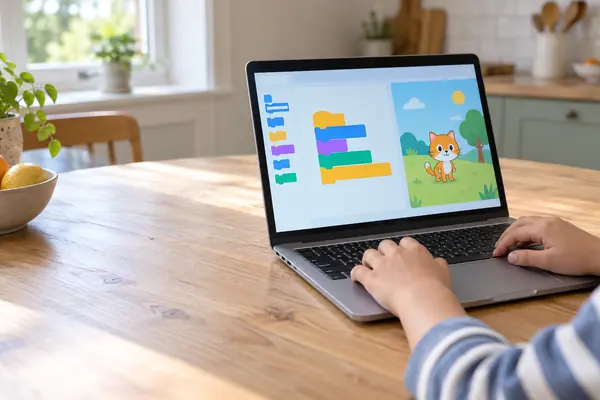
Children build programs by joining graphical blocks, like building bricks, instead of typing code. MIT designed it for ages 8 and up and released it free in 2007.
Find the right level doodlescratch.
BLOCK CODING, EXPLAINED
Scratch turns code into building blocks.
Children drag coloured blocks together to make stories, games and animations, with no typing and no syntax errors to fight. It came out of the MIT Media Lab in 2007 and is now one of the most common first steps into programming.
Find a starting point Read the short answer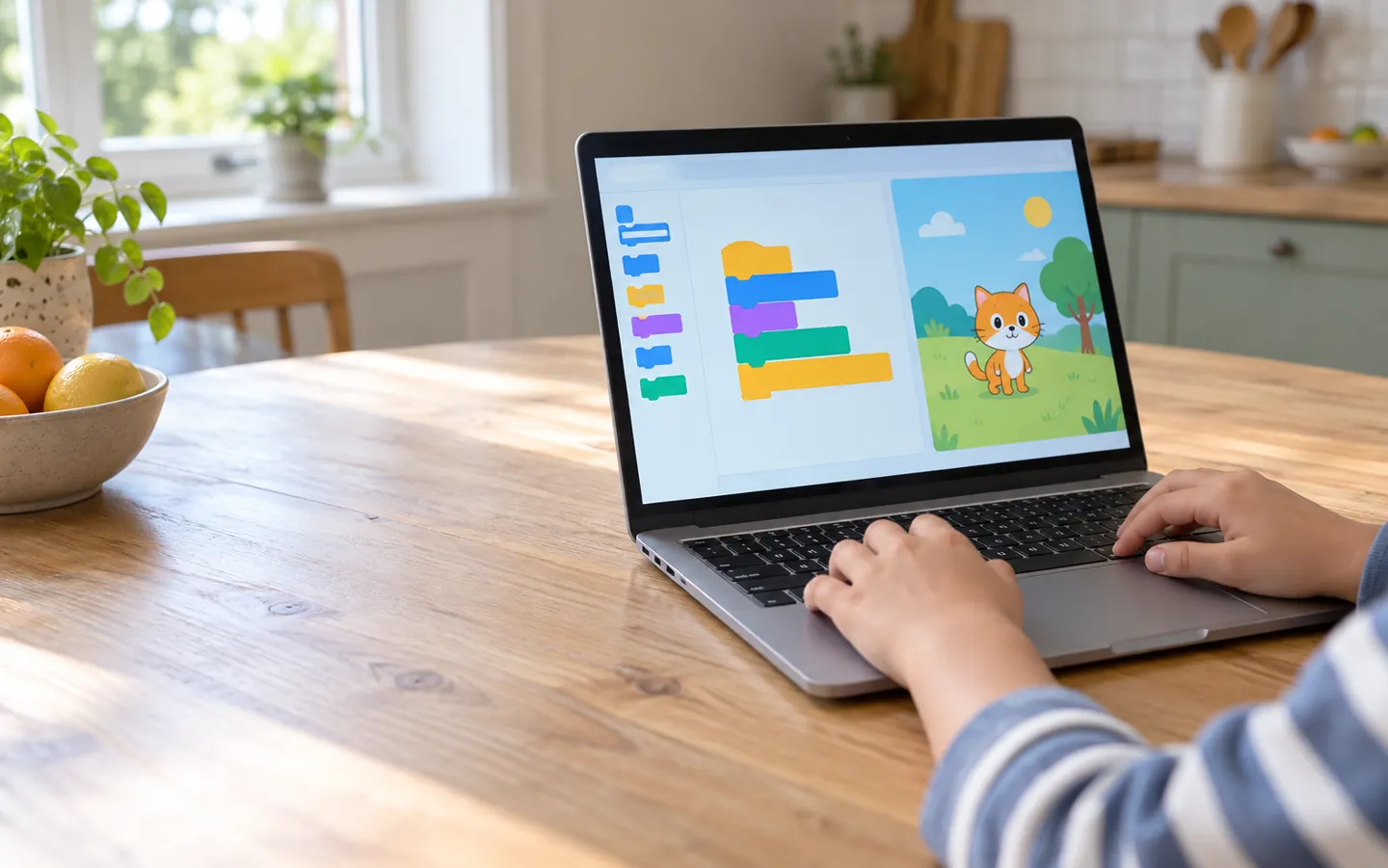
THE SHORT ANSWER
Scratch removes the typing, not the thinking.
The ideas are the same ones the curriculum asks for.
WHAT IT IS
Children build programs by joining graphical blocks, like building bricks, instead of typing code. MIT designed it for ages 8 and up and released it free in 2007.
Find the right levelIN SCHOOL
England's computing curriculum asks Key Stage 2 pupils to use sequence, selection and repetition and to work with variables. Those are exactly the ideas Scratch blocks are built around.
See the numbersYOUNGER CHILDREN
ScratchJr is the version for young children aged 5 to 7, who use it to program their own interactive stories and games.
First projectsWHERE TO START
Pick a stage to see what England's national curriculum for computing asks of children, and where Scratch fits. The bar shows how far the programming expectations reach.
Based on the Department for Education's computing programmes of study and ScratchJr guidance. General information for parents.
TWO NUMBERS WORTH KNOWING
How many children have used Scratch,
and how much they have made with it.
CHILDREN · SCRATCH FOUNDATION
Children who have created with Scratch since 2007
130<small> million+</small>
The Scratch Foundation says more than 130 million children, in every country worldwide, have created Scratch projects since 2007.
PROJECTS · SCRATCH FOUNDATION
Scratch projects created so far
1<small> billion+</small>
Those children have made more than a billion projects, and the Foundation says young people create over half a million new ones each day.
Scratch was designed in 2007 by the Lifelong Kindergarten group at the MIT Media Lab, and became the independent Scratch Foundation in 2019.
FOUR FIRST PROJECTS
Each project adds one idea from the computing curriculum. Do them in order and a child meets sequence, repetition, selection and debugging in a single afternoon.
WHAT CHILDREN LEARN
The MIT Media Lab says young people using Scratch build interactive stories, games and animations and share them with an online community. Along the way they pick up creative thinking, systematic reasoning and teamwork, as well as maths and computing ideas.
When MIT launched Scratch in 2007, it said children could make stories, games, music and animations and share them online, learning to think creatively and solve problems systematically.
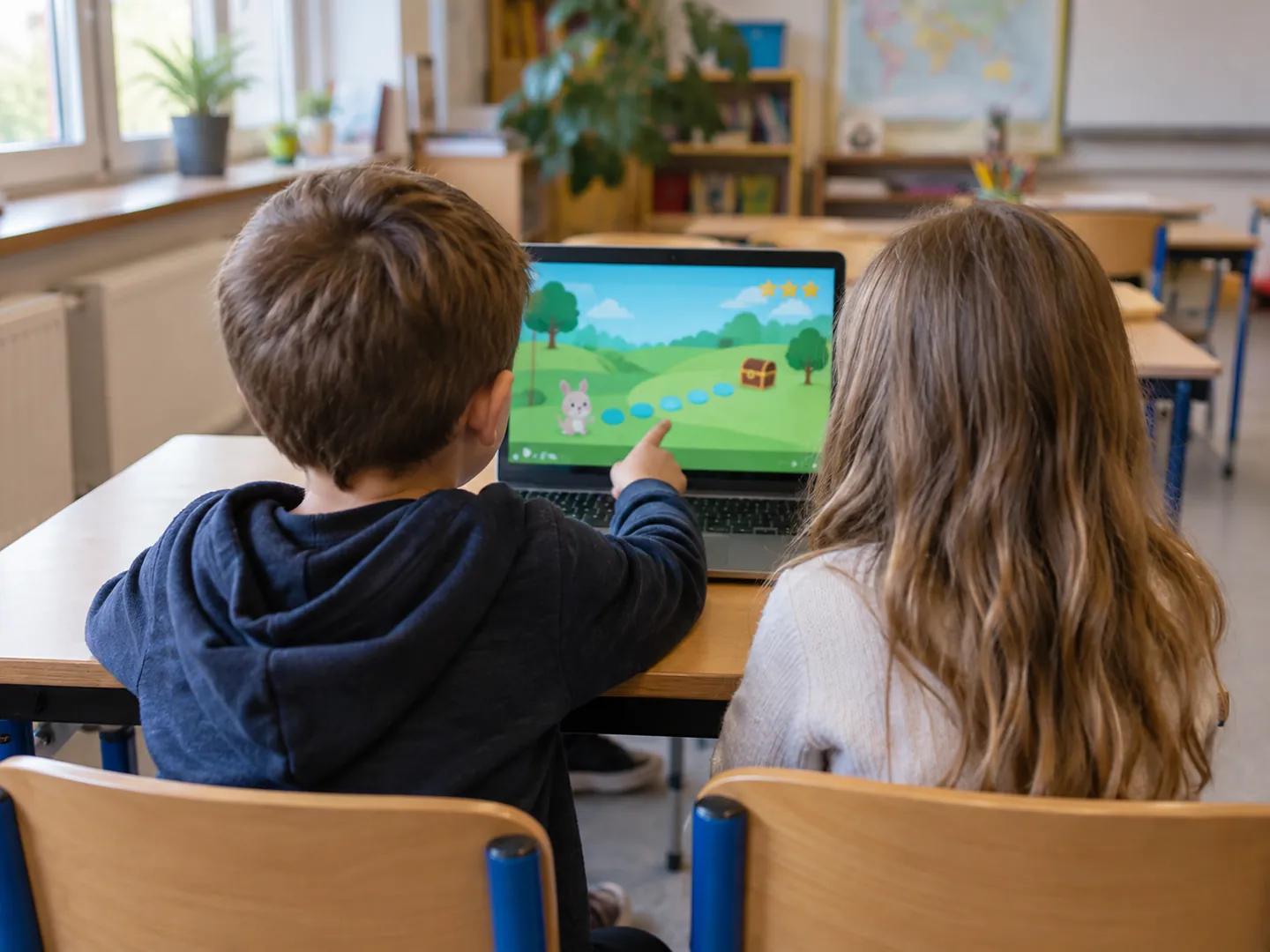
QUESTIONS PEOPLE ASK
A block-based programming language for children. Instead of typing code, children join graphical blocks to build interactive stories, games, music and animations. It was developed by the Lifelong Kindergarten group at the MIT Media Lab.
MIT designed Scratch for children aged 8 and up. ScratchJr is the version for young children aged 5 to 7.
The national curriculum in England does not name any particular tool. It asks Key Stage 2 pupils to design, write and debug programs using sequence, selection and repetition, which block coding like Scratch is well suited to.
Yes. The ideas are the same: algorithms, sequence, selection, repetition, variables and debugging. At Key Stage 3, the curriculum asks pupils to use two or more languages, at least one of them textual.
Scratch was created at the MIT Media Lab in 2007 and became the independent Scratch Foundation in 2019.
SOURCES
Each figure on this page comes from the sources below. Check them for the full detail and context.